



Nutritious Life: Healthy Tips, Healthy Recipes, Exercise

Become a Nutrition Coach! Get certified. Grow your business. Join our thriving community. Call 888-488-4077 or Schedule an Appointment!

|

Why You Need to Manage Stress Before You Change Your Diet (And Other Wellness Truths)

Why You Need to Manage Stress Before You Change Your Diet (And Other Wellness Truths)

Whenever Keri Glassman, our founder and renowned dietitian and thought-leader in the nutrition space, has the opportunity to talk about the 8 pillars of a nutritious life and how they work together to create a healthy and balanced life, she’s all over it. So when she was asked to be a guest on the super-informative and mega-fun podcast, Quiet the Diet with Holistic Dietitian, Michelle Shapiro, it was a no-brainer. During Keri and Michelle’s episode, the two dove into juicy wellness topics like managing stress, embracing habit changes, and finding true food freedom. Keri mused about how much has changed in the nutrition space over 20 years, why it’s so important to take an open-minded approach to nutrition, and the things that could be standing in the way of our quest to live truly healthy lifestyles. If you’ve ever wondered why you can’t lose weight no matter how strictly you stick to an eating plan, Keri will tell you exactly why. Tune into the podcast by clicking below and be sure to share it with a friend who needs to hear this info too.  (Featured Image: Unsplash)

Wellness is About More Than Nutrition: Sleep, Hydration, Exercise and More Are All Part of the Puzzle

  Nutritious Life Founder Keri Glassman has always known that healthy living is about much more than food. Since starting her practice as a registered dietitian nutritionist nearly 25 years ago, she has been incorporating components such as sleep and stress management into her clients’ meal plans. In other words,  nutrition is just one piece of a much bigger healthy lifestyle pie. These days, people are finally talking about and beginning to understand how interconnected things like exercise, healthy relationships, and diet are. In other words, your habits in one area impact your habits in another. You may already be a great eater, but maybe you’re not reaching your ideal weight because you’re insanely stressed at work and cortisol is wreaking havoc on your body. Or maybe you haven’t figured out how to fit a regular exercise routine into your schedule. Similarly, if you’re constantly sleep-deprived, you’re not going to have energy to work out, your sex drive might suffer, and you might make poor food choices. Below is a fun graphic that easily explains the interconnectedness of the eight pillars of a nutritious life. Check out our Instagram for more healthy tips, delicious recipes and, above all, a whole-person approach to what matters most … your health and wellness. The 8 Pillars of a Nutritious Life and How They Tie In to Wellness   View this post on Instagram   A post shared by NUTRITIOUS LIFE (@nutritiouslifeofficial) P.S. To learn more about Keri’s healthy perspective, check out the Nutritious Life Manifesto. Take Wellness to the Next Level If you’ve been considering your own career in wellness, join us! Learn more about the next round of enrollment in the Nutritious Life Studio, which provides cutting-edge nutrition, coaching, and business education to passionate students around the globe. We support our thriving community of thousands of wellness professionals in building and growing their healthy businesses. Our courses are 100% online and a hybrid of go-at-your-own-pace and optional live mentoring and coaching sessions taught by Keri and an incredible team of expert guest teachers. 

Prescribing Nature for Health: Why Your Doctor Might Order a Dose of Mother Earth for Your Next Rx

Prescribing Nature for Health: Why Your Doctor Might Order a Dose of Mother Earth for Your Next Rx

Don’t be surprised at your next wellness exam if your physician jots down on their Rx pad, “get outside in nature.” Yes, your doctor may advise you to take large doses of the highly-accessible (not to mention budget-friendly) medicine also known as the great outdoors. The holistic remedy of prescribing nature for health has become a growing trend around the globe. Physicians in various countries have been handing out “green prescriptions” in place of pharmaceutical meds as a way of treating chronic conditions, such as high blood pressure, diabetes, lung disease and anxiety, according to the World Economic Forum, an international non-profit committed to improving the state of the world. As we approach Earth Day, we take a look at how this natural form of therapy began, and why spending time with Mother Earth can do wonders for your physical and emotional well-being. Prescribing Nature For Health Around the Globe Japan Medical professionals telling their patients to go play outside is not a new form of treatment. Back in the early 1980s, Japan introduced the practice of Shinrin-Yoku, or forest bathing. This is the act of spending time in a forest, an environment shown to reduce blood pressure, pulse rate and cortisol levels. These days, there are more than 60 certified forest therapy locations throughout the country (thanks to a $4-million government investment) that are in use by approximately five million citizens. In fact, Shinrin-Yoku is considered a standard practice in Japan in treating symptoms of depression and anxiety, along with managing stress levels. New Zealand But they’re not the only ones. In the late 1990s, New Zealand launched a public health intervention dubbed the Green Prescription Program. It is based on national guidelines that suggest 30 minutes of exercise five days a week. General practitioners prescribe mostly outdoor activities (including walking, swimming and kayaking) to help manage or prevent conditions associated with a sedentary lifestyle. A study, published in the journal BMC Family Practice, found that green prescriptions have a positive effect on patients living with a pre-existing condition, such as obesity or depression, as well as those at risk of developing diabetes and heart disease. Today, New Zealanders can even apply for a green prescription in order to be assigned a health and wellness coach who will instruct them to take part in outdoor exercises, such as playing with their family in the park or gardening with neighbors in the community. Taking part in their Green Prescription program “can help you breathe better, have less pain and reduce your risk of falling, as well as make it less likely you will get some other health conditions, such as some types of cancer,” says Health Navigator New Zealand. United Kingdom The United Kingdom also believes that healing is found in nature. In 2020, the UK invested more than $5 million into “green social prescribing” to benefit the urban and rural areas hit the hardest during the pandemic. “A connection with nature contributes to well-being and improved mental health,” said Environment Secretary George Eustic when announcing the program. United States Thankfully, the United States is getting in on the trend of prescribing nature for health by recommending nature-based therapy as part of a holistic wellness plan. Read on for more about that. Fill Your Park Prescription Nearly 10 years ago, a group of park agencies and healthcare providers in the U.S. teamed up to develop Park Prescription programs to help boost mental and physical health. This movement eventually turned into the National ParkRx Initiative, a program run by the Golden Gate National Parks Conservancy in partnership with the National Park Service. Its mission is “supporting the emerging community of Park Prescription practitioners.” Physicians across the U.S. are prescribing nature for health in 34 states (and Washington D.C.), including Vermont, Maryland, Colorado and California. If you need to make an appointment, the U.S. National Park Service has declared Saturday, April 16, as Park Prescription (Park RX) Day, which also serves as a way to kick off the annual National Park Week. Not sure how to fill your prescription? Click here to find a participating park near you. Why A Prescription May Be Key Naturally, you can make an effort to spend more time in nature. From working out in a park to scheduling walking meetings with colleagues to strolling through a plant nursery, breathing in fresh air on a daily basis is definitely a start. After all, the Environmental Protection Agency (EPA) reports that Americans spend an average of 90% of their time indoors (yikes!). (Which reminds us that there’s a trend blooming called biophilia, and it’s about bringing the outdoors in to boost wellness.) But motivating yourself is not the same as a prescription from your MD or DO. As evidence, patients in New Zealand view an actual prescription written by their physician as a formal treatment for their health, according to a study. Seeing the words written on a prescription pad doesn’t just serve as a reminder to be more active in nature. It validates the importance of the medicine prescribed by the physician. Benefits Of Spending Time In Nature It’s really not surprising that science supports prescribing nature for health. Here’s some proof: Nature may improve gut health: Researchers from the University College London speculate that being exposed to organisms within the environment may help regulate the immune system and encourage beneficial bacteria that reside in the gut, skin and lungs, ultimately warding off diseases. This investigation bounced off previous studies which had found a link between the natural environment and long-term health benefits (including fewer deaths, along with fewer cases of heart disease and psychiatric problems). The great outdoors curbs stress and anxiety: Within the last five years, the journal Frontiers in Psychology published research—one study and one review—where the authors concluded that being active in nature can have a profound effect on stress, anxiety, mental health and overall well-being. Green prescriptions improve heart health: In 2018, the journal Environmental Research published a meta-analysis of 143

The Ultimate Guide to Self-Care Via the 8 Pillars of a Nutritious Life

As we’ve said before, placing nutritious foods on your plate is only one step in living your most Nutritious Life. That’s why we believe in the 8 pillars created by Nutritious Life founder and our resident guru Keri Glassman, which are: Eat Empowered, Sleep Deep, Drink Up, Nurture Yourself, Live Consciously, Sweat Often, Love More and Stress Less. (You can read up on what they all mean and how incredibly integrated they are here.) And since we’re all about stepping up our game, we decided to dig into the latest health science, trends and consumer preferences to see how they relate to our 8 pillars and, in turn, you and your most nutritious life. RELATED: The 8 Pillars of a Nutritious Life: If You Want to Lose Weight and Be Healthier and Happier, Nutrition Is Just the Beginning Read on for the latest innovations for 2022 as we offer you the ultimate guide to self care and a truly nutritious life. The Ultimate Guide to Self-Care and a Nutritious Life Eat Empowered After examining patterns in consumer preferences and learning about upcoming innovative items to hit the shelves, Whole Foods Market released their first Top 10 Anticipated Food Trends for 2022. A small but powerhouse food is currently being added to numerous products, such as crackers, creamy cheeses and ice creams—the mighty sunflower seed. It’s not surprising since this seed (which comes from the yellow, daisy-looking plant) is packed with nutrients, including vitamin E, selenium, copper, zinc, iron, folate and other B vitamins, along with offering protein, fiber and anti-inflammatory unsaturated fats. Sunflower seeds hold numerous health benefits, where one study from Harvard School of Public Health found an association between seeds (including sunflower) and a lower risk of heart disease and type 2 diabetes, as well as a “significant reduction” in blood pressure and cholesterol. Toss them into smoothies and salads, grab some for a snack and keep an eye out for some new sunflower-based foods. Needless to say, we’re nuts about seeds! Sleep Deep Sleep is an essential function for both physical and emotional health. While it revolves around this delicate balance of figuring out how much your body needs, how to doze off faster and how to stay in Snoozeville until the sun comes up, researchers from the European Society of Cardiology may have uncovered the best time to hit the sheets. With the help of a digital wrist device, study authors followed the sleep habits of more than 88,000 adults for one week (who had filled out questionnaires about their lifestyle, health, etc.). Nearly six years later, during the follow-up portion of the trial, the investigators found that 3.6% of the participants had been diagnosed with cardiovascular disease, ranging from heart attack, heart failure to stroke. After taking a number of factors into account (such as sex, age, smoking status and whether someone labeled themselves as either an early bird or night owl), the researchers concluded that those who went to bed between 10 p.m. and 11 p.m. had the least incidences of heart issues while those who put their head on a pillow at midnight or later had the highest occurrences. So if you’re a sleep procrastinator, now is the time to put an end to it! Drink Up Another item—well, technically flower—that stood out in the Whole Foods Market top 10 list is hibiscus. A blend of hot pink and ruby red in color, these tart petals are being transformed into more than tea in the new year. Think unsweetened, flavored water and Italian soda. (This tropical plant will also be popping up in foods, such as yogurt and fruit spreads.) Whether you try one of these new beverages or go the traditional tea route, hibiscus contains free radical-fighting antioxidants and is most known for helping to reduce blood pressure. According to a small study published in the Journal of Advanced Pharmaceutical Technology & Research, two cups of hibiscus tea per day showed to be an effective form of natural medicine for adults living with stage 1 hypertension (a systolic pressure ranging from 130 to 139 mm Hg or a diastolic pressure ranging from 80 to 89 mm Hg, as defined by the Mayo Clinic). Nurture Yourself WGSN, a leading consumer global trend forecaster, has predicted that “waterless washing” beauty and hygiene products will take the spotlight in 2022. Everything from showerless shampoo and conditioner to dry face masks, these items (sometimes referred to as zero-waste beauty) are made without H2O. According to a report by Forbes, these products are usually more concentrated and made instead with either butters, oils or waxes and oil-soluble actives. Plus—and this correlates blends with our “Live Consciously” pillar— saving water reduces greenhouse gas emissions. Furthermore, water-free items tend to weigh less and require simpler packing, which equates to reducing their total carbon footprint. So as a result, both you and Mother Nature will be glowing. Live Consciously Yes, while many of us may be dealing with a serious case of Zoom fatigue (we’re coming up on almost two years of this platform becoming our new normal!), researchers from the University of Texas at Austin have recently concluded that virtual conferences can offer personal, professional and environmental perks. For starters, online events are keeping us at a (very) safe distance from each other during the latest phase of this pandemic. Videoconferencing has also provided more opportunities for women—a.k.a. moms—to take a seat at the table. In fact, data shows that female participation at virtual conferences increased by 253% compared to in-person conferences. And thanks to fewer trips via planes, trains and automobiles, study authors calculated that one person’s attendance at a virtual conference in 2019 had the same carbon footprint as 7,000 online attendees! Even though we’re looking forward to being more social again, it would be wise to keep video-based meetings in our future. Sweat Often It’s not news that lacing up and doing your favorite workout can lead to a whole slew of physical and mental

Elissa Goodman’s Anti-Cancer Lifestyle Involves Green Juice and Reflexology Foot Massages

Elissa Goodman’s Anti-Cancer Lifestyle Involves Green Juice and Reflexology Foot Massages

When Los Angeles-based holistic nutritionist Elissa Goodman talks about the power of healthy food, she goes much deeper than thinner thighs or clearer skin. Goodman was diagnosed with Hodgkin’s Lymphoma at age 32, and her cancer experience ignited a passion for wellness that led her to her current career. Now, Goodman works with clients to promote an anti-cancer lifestyle, from foods that are associated with prevention to holistic practices like releasing stressful thought patterns. Her book, Cancer Hacks, was released in 2016, and she’s the host of The Elissa Goodman Show on Focus TV, in which she interviews inspiring “wellness warriors.” Goodman’s also a big proponent of cleansing, and her S.O.U.P. Cleanse is available for delivery in LA. After she spoke at The Nutritious Life Studio’s 2017 Masterclass, we decided to find out more. Find out how she lives her unique Nutritious Life, below. How Does Elissa Goodman Live a Nutritious Life? If you had to name your healthy diet, what would you call it? Plant-Based Flexitarianism. Why? Because I eat a little bit of everything! I feel that anything too restrictive wouldn’t work for me long-term, but 80% of the time I eat plant-based and add in some animal protein or products like grass-fed ghee and organic, free-range eggs a few times a week. RELATED: The Essential Guide to Plant-Based Protein What’s your go-to breakfast? I’m not a big breakfast person;  I just never have been. I find that if I have a Bulletproof-style matcha latte (or, sometimes even coffee), I am satiated until lunch. My matcha latte is a meal in a cup though—it has almond or cashew milk, MCT oil, energy-boosting matcha, and a touch of coconut milk. I usually follow this up with a green juice in the early afternoon. Your go-to workday lunch? If I’m at the office, I often eat soup from my S.O.U.P. Cleanse program. There’s always a jar or two in the fridge, and my favorites at the moment are the Broccoli Lentil or the Caribbean-inspired Black Bean. I also love M Cafe’s M Chopped, Wild Salmon Maki-Wrap, or the Great Cardini Salad from Real Food Daily. They’re my top Postmates delivery items! Your go-to workday dinner? My fiance and I try to go vegan for dinner as often as possible. Tonight we’re having vegan eggplant “parmesan” with Kite Hill almond ricotta cheese and gluten-free pasta from Andean Dream. For a quick and easy dinner, I like to marinate tempeh with a little apple cider vinegar, coconut aminos, and lime juice and saute. I serve this with sauteed veggies and cauliflower puree. What’s the one food you always have in your fridge? Fermented Coconut Yogurt (GT’s, Coconut Cult, and New Earth are some favorites), Sonoma Brinery Raw Sauerkraut, Malk Cashew Milk, Berries, and Tempeh. The one food you’d never buy? Too many to name one, but mainly no heavily processed foods, no canola or vegetable oils, and definitely no soda! RELATED: 5 Scary Things Inflammation Does to Your Body The snack you always have with you when traveling? My super-seed bars. Your favorite food indulgence? Potato chips. Other than water, what do you drink regularly? Tulsi Tea, green juices, and the lemon flavor Ultima Replenisher. How often do you exercise, and what’s your workout of choice? Yoga three to four times per week and walking as much as I can. You’ll also find me taking the occasional hip-hop yoga class with my daughters. What’s your go-to tool for managing stress? Meditation. I love Unplug’s Meditation app, Evenflow, and Calm.com. I also journal, and when I really need it, I turn to two incredible energy healers to help clear out the negative and leave me feeling grounded. How do you pamper yourself when you need it? I get a reflexology foot massage once a week! Do you have a favorite health gadget? My juicer, I use it almost daily for a dose of vitamins and minerals. There is nothing like a fresh green juice! RELATED: 3 Green Juice Recipes From Beginner to Pro How do you express and spread love? When my clients have been to many doctors and they have not gotten the answers they are looking for, I give them hope and lots of love. I know everyone is capable of healing and thriving in this life. I hold the space for them to heal and get them what they need as long as they need it. What does it mean to you to “live consciously”? It has taken years to discover what living consciously really means. I have worked diligently on releasing old thought patterns and habits that did not get me what I wanted in my life. I’m looking for deep connection and intimacy, and when you are not conscious, that is not possible to achieve. Also, we cannot truly heal from health issues if we are not present and conscious. What’s your weirdest healthy habit? I relentlessly search for a fresh green juice no matter what country I’m in. Lightning Round Meditation or massage? I cannot live without reflexology foot massages at least once a week. A hot shower or a soothing bath? An Epsom salt bath with essential oils is grounding and releases negative energy I have come into contact with during the day. Almond butter or peanut butter? I’m a major peanut butter lover. I can eat it for breakfast, lunch, and dinner…lol! I buy organic and fresh-pressed. Coffee or tea? In the morning, I’m slightly addicted to organic coffee with MCT Oil, cashew milk, and pure stevia. The rest of the day I drink Organic India Tulsi Tea. A long run outside or a dark spin class? Neither for me. I much prefer a hike or a hot yoga class. (Photos: Elissa Goodman)

5 Things You Need to Know About Acupuncture Before You Try It

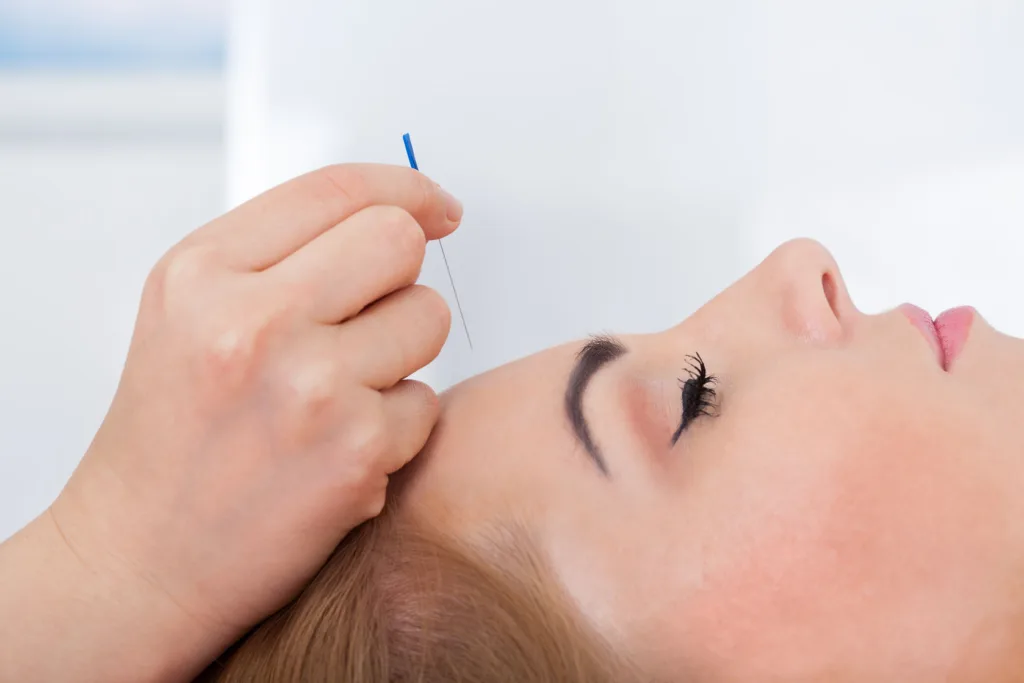
acupuncture facts and benefits

By Lisa Elaine Held While it’s an ancient, Eastern healing modality, acupuncture is now pretty well accepted as an effective treatment for many modern ailments. Especially since more people are thinking about health and wellness from a more holistic point of view, a perspective that’s at the core of Traditional Chinese Medicine. “There are aspects of health that are purely physical,” says Ayla Lavin L.Ac., MSI, an acupuncturist at Modrn Sanctuary in New York City,” but healing has to incorporate all of the levels of the human being.” RELATED: Your Guide to Essential Oils Still, if you’ve never tried it, you may be thinking something like: “They’re going to stick needles where?!” To help allay those fears (in case acupuncture may be the solution to a nagging pain nothing else has worked for), we’re breaking down a few need-to-know facts, here. 5 Need-to-Know Facts About Acupuncture 1. The needles are teeny-tiny. To be honest, calling them “needles” at all sometimes feels like a disservice, since many people picture medical or sewing needles in their minds. In fact, acupuncture needles more closely resemble bristles of a hairbrush. They’re super skinny and bendy, and when they poke into your skin, you barely feel a prick. You will feel a dull, achy sensation just beneath the skin, sometimes, which varies in intensity depending on your issue. 2. It’s based on principles of Chinese Medicine. The basic concept is based on what Chinese Medicine calls qi (pronounced chi), an energy or “life force” that flows throughout the body. When the flow of qi is blocked or stagnated, health issues arise, Lavin explains. Practitioners place needles on points along 12 meridians of the body to get rid of blockages and get your qi moving again. 3. …But scientific research shows it works. Of course, Western doctors don’t recognize qi as an actual physical concept. Still, a ton of scientific research has been done and has found acupuncture to be effective at managing all kinds of conditions, even if MDs don’t quite understand how it’s working yet. Lavin says neck and back pain and headaches are the issues she treats the most, and the research is strongest in this area. She also treats many women for hormonal imbalances that lead to issues like infertility, heavy periods, cramps, and weight gain, or symptoms of menopause like hot flashes and low libido. RELATED: How to Track Your Period for More Energy and Happiness 4. And it’ll likely relieve stress no matter what. Even if your carpal tunnel isn’t totally cured, you’ll likely get some stress relief out of the therapy no matter what you’re actually being treated for, since “acupuncture insertion stimulates anti-stress hormones,” Lavin says. Not to mention the fact that if you go to a spa-like spot like Modrn Sanctuary, you’ll be laying down listening to soothing music and breathing in aromatherapy through it all. RELATED: 9 Delicious, Stress-Fighting Foods to Eat Daily 5. Just make sure you go to a qualified acupuncturist. Statistically, acupuncture is about as safe as you can get when it comes to treatment for any kind of health issue. Still, you wouldn’t go see a physical therapist or physician who wasn’t certified, and you shouldn’t get acupuncture from a shady storefront, either. Go to a licensed acupuncturist (usually abbreviated L.Ac. after their name), and feel free to ask about their training, which is pretty intensive if they’re truly qualified.

10 Surprising Healthy Habits Wellness Experts Trust

healthy habits from experts

There are eight pillars of living a Nutritious Life because we believe that a balanced lifestyle encompasses much more than just “more sweat, less sugar”—and when you ask wellness experts to share the healthy habits that add vibrancy to their lives on the reg, it’s obvious most agree. Over time, we’ve tapped a variety of these role models—from celebrity yoga teachers and trainers to superstar nutritionists and healthy chefs—to share how they live their own Nutritious Lives. Within the interviews, they revealed super interesting insights into healthy habits they swear by, some of which may surprise you. We’re sharing 10, here, to inspire your own well-rounded wellness regimen. Surprising Healthy Habits Wellness Experts Trust 1. Eat food that makes you feel good. It’s not always about balancing protein and carbs or scouring labels for organic ingredients, say Sakara founders Whitney Tingle and Danielle DuBoise. Eating Empowered, to them, is “knowing what it feels like to eat good food. Food is meant to be nourishment and food should make you feel sexy!” Read more. 2. Align your body, and your life will follow. “Finding alignment in your physical body is the first step to aligning your life, connecting to your gifts, attracting your deepest desires and feeling like you are on your true path,” says foam-rolling guru and best-selling author Lauren Roxburgh. “Over the years as I was so deeply studying the body, I realized many other things in my life and self were also coming into ‘alignment.’ I’ve seen it with hundreds of my clients too.” Read more. 3. Sip on water and tea as often as possible. Nearly all of the experts mention hydration as incredibly important, and Nutrition Stripped founder and RD McKel Hill swears by supplementing plenty of lemon-spiked H2O with matcha lattes and all kinds of other teas. “I’m a huge tea drinker all day long, whether it’s green tea, liver supportive tea, peppermint, or ginger. #gimmiealltheteas” Read more. 4. Give back. Sure, wellness is about your life, but focusing on others may also be essential to finding balance. “I try to pour my energy into causes that I am passionate about, like eating disorder recovery, animal rescue and raising awareness of cyberbullying,” says The Balanced Blonde blogger Jordan Younger. “I host a lot of events that give back to some of my favorite local LA organizations that raise funds/awareness for those causes.” Read more. 5. Design your space for great sleep. Chef, author, and all-around wellness star Candice Kumai details how getting a solid night’s sleep starts with how you design your space. “No electronic devices in the bedroom, no TV in the house—only reading, art, vision boards, and photography on our walls. Plus, lots of plants in the house for oxygen.” Read more. 6. Surround yourself with happy people. “I collect loving people in my life every day,” explains fitness celeb extraordinaire Natalie Jill. “When I meet positive, goal oriented, successful, happy, loving, and energetic people…I want them in my life. I find ways to be around them. They energize me, inspire me, and help me want to better myself! And when I am my better self, I am able to love more.” Read more. 7. Ask yourself, “How important is it?” When your clients include Jennifers with the last names Aniston and Lawrence, life can be pretty busy. To make it through tough situations, yoga teacher-to-the-stars Mandy Ingber asks herself this simple question. “The phrase ‘How important is it?’ reminds me that there are no big deals. When my behavior and actions are aligned with my own moral compass, I can handle life’s twists and turns,” she says. “Although a learned skill, relaxing into what comes is the discipline I practice. Everything is as it should be, and I can trust that my life is unfolding before me in perfect order.” Read more. 8. Make time for real meals. Maintaining a healthy diet is easier when you’re organized about your eating and in control of your meals says Deliciously Ella blogger Ella Woodward. “It’s easy to snack, snack, snack, but I like to sit down to proper meals, and I like to cook my meals,” she says. Read more. 9. Move, at least a little bit, every. single. day. “Trying to move a little every day is a big part of my life. It doesn’t always happen, but I feel the best when I’m more active. Every little bit adds up,” says Michele Promaulayko, author of 20 Pounds Younger and the Editor-in-Chief at Cosmopolitan magazine. “You don’t have to run for hours on a treadmill to burn fat.” Read more. 10. Don’t discount the power of me-time. If you’ve got a hobby that makes you happy or feel refreshed whenever you take a hot bath, those things have real value, even if they feel indulgent. Celebrity yoga teacher Kathryn Budig nurtures herself regularly with “epsom salt baths, reading juicy fiction novels, taking time to write for myself, and experimenting in the kitchen.” Read more.

How to Strengthen Your Immune System Every Time You Eat

how to strengthen your immune system

Got a runny nose that won’t quit? If you’re wondering how to strengthen your immune system, here’s a simple strategy: add immunity-boosting foods to every meal. (Duh!) No, we’re not just talking about citrus fruits and ginger. In this video, we share nutrient-dense foods that may help you avoid getting a cold or the flu—and you may not have heard about their special powers before. You’ll meet the vegetable that has twice the vitamin C of an orange, discover which mushrooms are the best for your immune system, and find out whether chicken soup is really the effective remedy your Grandmother promised it was. Watch the video to get smart about avoiding illness—and recovering faster when you’re already sick—now. How to Strengthen Your Immune System With Food  

What Is Moringa, and Is It Really Good For Me?

what is moringa

Q: What is moringa, and does it have major health benefits? A: Like many of the superfoods that take a turn in the spotlight (acai! matcha!), you may have heard that moringa is about to cure everything that ails you. After all, the plant is often referred to as “the miracle tree.” But while it does have a pretty impressive nutrient profile, adding it to your smoothies won’t magically guarantee good health. Here’s what you need to know. What is moringa? The moringa tree is native to South Asia and grows crazy fast in tough climate conditions. It produces “drumstick” pods, which are seeds that can be eaten like peas or pressed into oil. Its small, round leaves can also be eaten fresh, or dried and powdered. Most people in the U.S. ingest the leaves as a powder added to smoothies. Practitioners of Ayurveda, India’s ancient system of medicine, believe the plant can help to prevent or alleviate symptoms in 300 diseases, which brings us to … What are moringa’s actual benefits? Western medicine definitely hasn’t come close to verifying moringa’s ability to prevent all those diseases (there are, in fact, very few top-notch clinical studies on the plant), but moringa does have a lot going for it nutritionally. It delivers high doses of iron, vitamin C, potassium, and calcium. Some studies have shown it may fight inflammation and it also contains lots of powerful antioxidants. Research has also shown it may reduce some risk factors for diabetes and heart disease, and it has many other promising potential medicinal uses. The takeaway? Moringa is certainly good for you, but it’s no magic bullet and isn’t easy to find. If you want to buy a green powder that lists it as an ingredient and boost your smoothie with it, go for it. But if you’re eating lots of dark, leafy greens and antioxidant-rich berries, you’ll also be fine without it. Remember that supplementing your diet with the most nutrient-rich foods is just one small component of a healthy, balanced lifestyle. RELATED: If You Want to Lose Weight and Be Healthier and Happier, Nutrition Is Just the Beginning (Image: Shutterstock)

FOOTER TEXT