
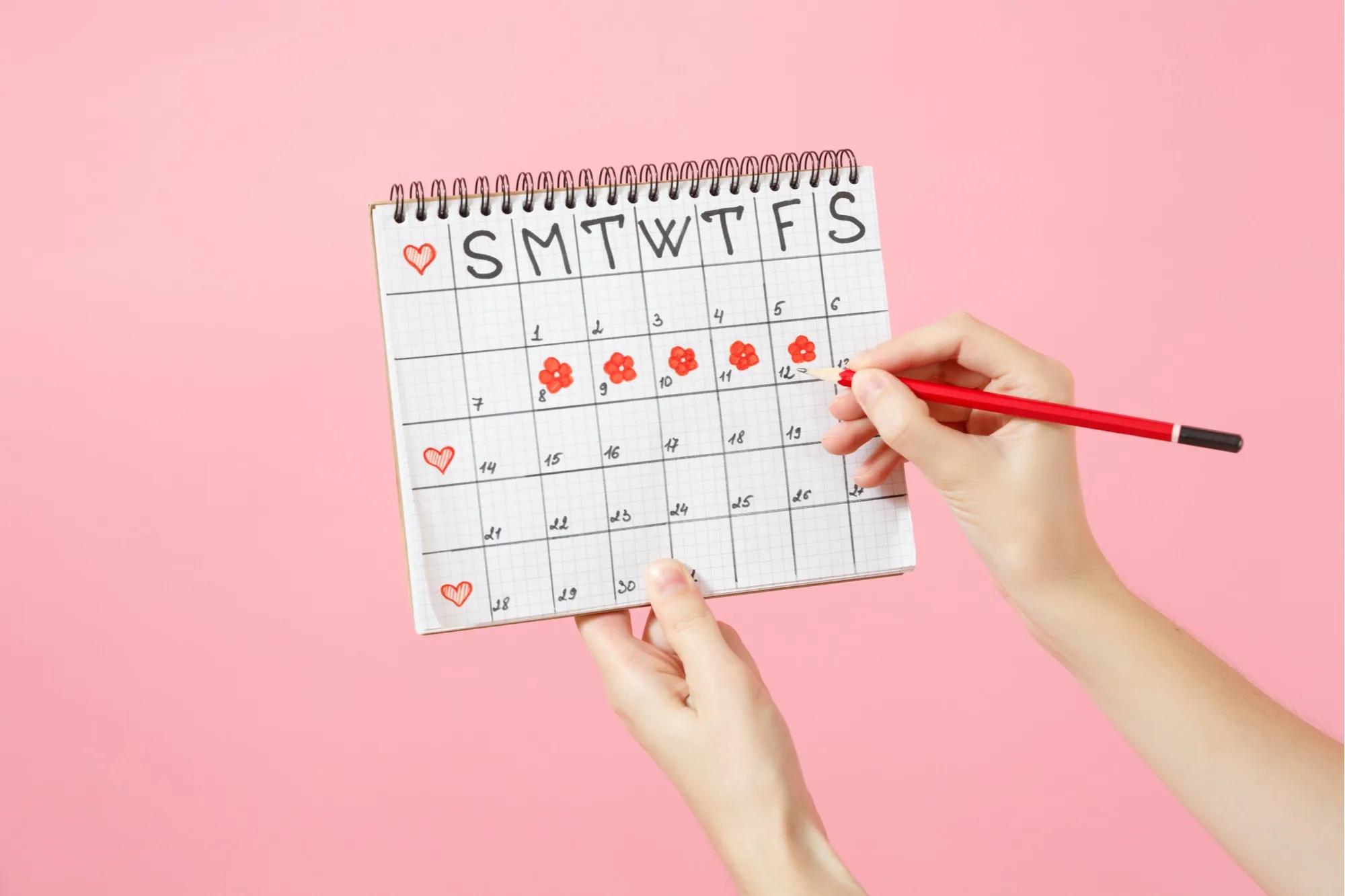
It’s not just pregnancy and menopause that can cause your period to go MIA, and I know from experience. The first month I went without mine, it was a relief, honestly. No need to scramble for a tampon or worry about leaks? All right! But as the months—and, eventually years—progressed, it was clear something was wrong with my body. Very wrong.
After finally regaining enough weight and balancing my hormones with a kickstart from medication from my ob-gyn, my flow returned. A whopping 16 years later, when I recovered from my eating disorder.
RELATED: Emotional Eating vs. Eating Disorders: How to Tell the Difference
“It's important to have a menstrual cycle,” says Arianna Sholes-Douglas, MD, founder and owner of Tula Wellness and Aesthetics Center in Tucson, Arizona and the author of The Menopause Myth. “Ovulation is the key, and every month around Day 14, you should ovulate.”
What’s the big deal if you're not TTC? Well, if you aren’t getting your period, the lining of your uterus keeps building thicker and thicker, and an unstable or irregular amount of lining can affect your health over time.
“Overgrowth of the endometrium over the long-term can increase your risk of endometrial cancer,” Sholes-Douglas says. “And if the lining of the uterus continues to build, bleeding—when it does occur—will be irregular and unpredictable. Heavy bleeding can lead to anemia.”
RELATED: 5 Delicious Foods For Cancer Prevention
You can be officially diagnosed with amenorrhea, or absent periods, after three months of a missing period, according to the National Institutes of Health. After six months, the health problems above become a real concern, so you should def see a doc by then.
Also important? A missing period not related to pregnancy, lactation, or menopause—referred to as “secondary amenorrhea”—is often a sign that something else is off, too, like the problems below:
You’re super stressed out
Stress hormones have a ton of consequences, and losing your period can be one of them. Target the source of stress and ease it through a healthy morning routine, calm yoga flows, meditation, journaling, counseling, or whatever you find helps you feel less on-edge.
Once your stress levels decrease, your period should return back to its regularly scheduled programming. If not, it’s time to see a pro for some advice and possibly a birth control RX, which will force the lining to shed.
RELATED: 3 Interesting New Findings About How Stress Affects Your Health (and Life)
You lost a ton of weight
Despite what you see on runways and in fashion ads, you can indeed be too skinny. And one of the many things that can result from reaching an extremely low body weight is that your reproductive system will slow or stop due to interruptions in usual hormone activity. Once a woman reaches about 10 percent below her normal weight or falls below a body mass index of 20 (calculate yours here), she’s at risk for losing her period, Sholes-Douglas says.
Work with your medical team (doctor, dietitian, and mental health professional, if needed), to return to a healthy weight. (By the way, here’s how to tell if you have disordered eating patterns.)
You’re exercising too much
Even if your weight falls within a “normal” range, too much physical activity can turn off your flow. About 5 to 25 percent of women athletes exercise so hard or so much they lose their periods, reports WebMD. Dancers, gymnasts, and runners are at particularly high risk, since intense activities are most likely to impact reproductive hormone levels.
If your doctor diagnoses you with exercise-induced amenorrhea, the most common treatment strategies include getting estrogen levels back to a normal range and adjusting caloric intake to ensure your body is receiving enough fuel.
RELATED: Why You Should Consider Breaking Up With Your Scale
You have PCOS
PCOS, or polycystic ovarian syndrome, is caused by too much insulin (the hormone that helps to convert food into energy) or too many androgens (male hormones) in the body, according to the Office on Women’s Health. As many as one in 10 women between 15 and 44 may have PCOS. Beyond messing with your menstrual cycle, PCOS symptoms include acne, extra facial hair, thinning scalp hair, and weight gain—or trouble losing weight, if attempting to do so.
Your doctor can diagnose and potentially provide medicine to help control your symptoms, if necessary. While there’s no cure for PCOS, focusing on lifestyle factors, such as eating a well-balanced diet, exercising regularly, and losing extra weight (if you have it to lose) can help improve your symptoms.
(Photo: Shutterstock)