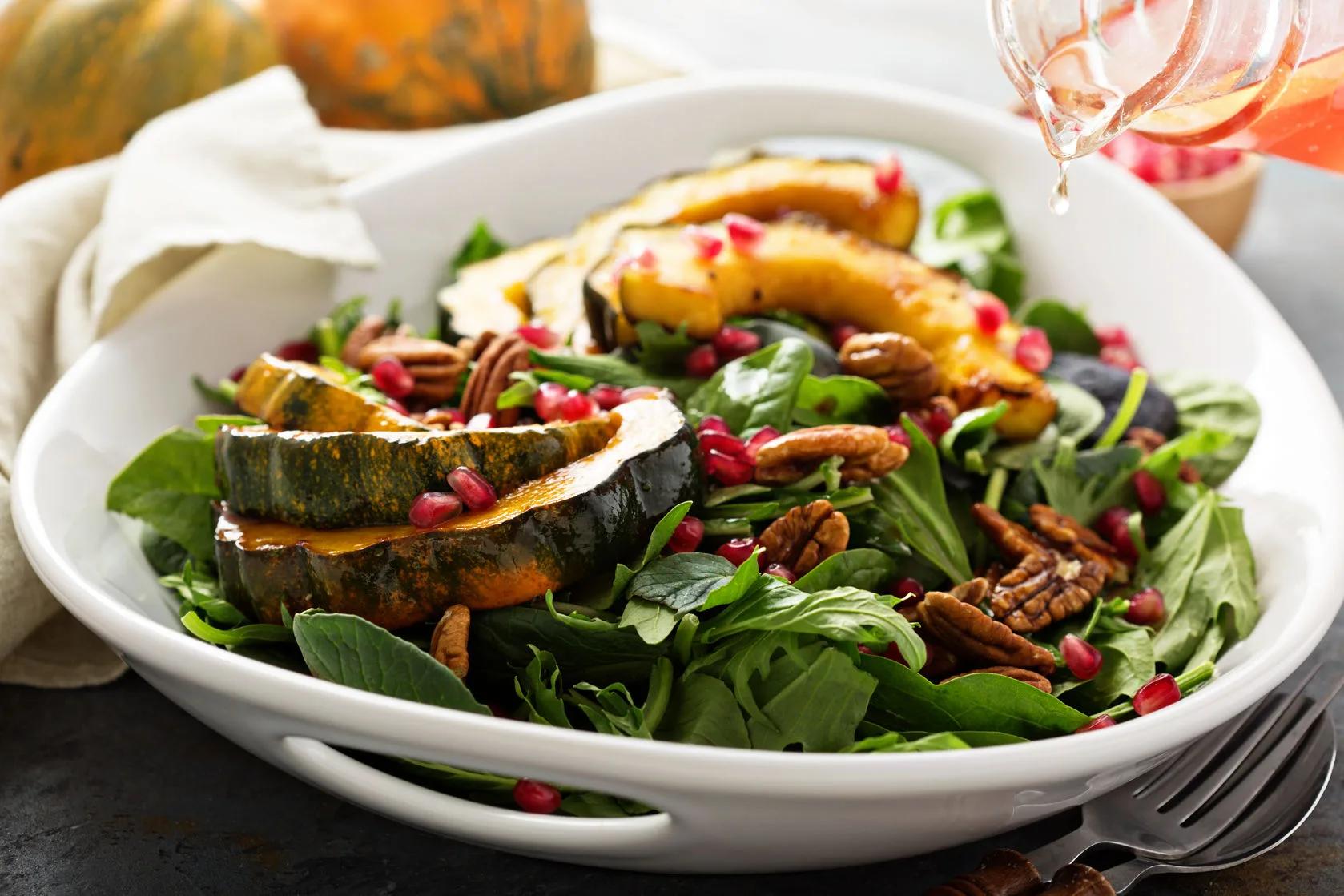
Yes, acorn squash is healthy. It's a fiber-rich, nutrient-dense winter squash with vitamin C and minerals like magnesium, iron and calcium, and it's easy to turn into a full meal, like the baked egg version below.
It's squash season, and pumpkin always seems to take center stage. Butternut squash comes in a close second, getting its yearly fifteen minutes of fame on menus everywhere right now. As a nutritionist, this makes me so happy! Is there anything better than seeing people eat seasonally? When you eat foods that are in season, you are eating produce picked and eaten at its peak. In general, these foods will be richer in vitamins, minerals and antioxidants. And while pumpkin and butternut squash certainly deserve the spotlight, I think some of autumn’s other produce offerings get upstaged far too often. So I am taking this opportunity to highlight a new star of the show: my personal favorite winter squash, the acorn squash. Acorn squash is the green, speckled round squash you see next to butternut squash at the grocery store...the one that probably has not made it into your grocery cart. Hopefully, that's about to change.
Why I think acorn squash should not be ignored:
- Like pumpkin and butternut squash, it is an extremely nutrient dense food, meaning that it is rich in nutrients and low in calories.
- Acorn squash is an exceptional source of antioxidants. One cup of baked acorn squash provides about 9 grams of fiber and 25% of the Daily Value for vitamin C.
- Like all winter squash, acorn squash is rich in carotenes, and squash has been linked to protection against certain cancers, cardiovascular disease and macular degeneration.
- Acorn squash is a starchy vegetable so it is higher in carbohydrates than many other vegetables. However, it is rich in fiber, providing about 9 grams of fiber per 1 cup serving. That fiber can help you feel full and may help keep sugar cravings in check later in the day.
- Acorn squash is also known for being high in thiamine, a B vitamin that helps the body metabolize food.
- Like its orange counterparts, acorn squash is rich in minerals such as magnesium, iron and calcium. Magnesium and calcium help to maintain normal blood pressure and magnesium has also been shown to help inhibit fat absorption. Iron is needed to help form red blood cells to carry oxygen through your body.
- Winter squash, acorn included, has a long shelf life. So, if you don’t get around to preparing it the week you bought it, you have a few more weeks to give it a shot!
At Nutritious Life, Keri promotes finding your healthy food memories and incorporating them into being your most nutritious self. Healthy food memories are healthy foods that were part of your childhood that personally invoke happy, comforting emotions. For me, my dad’s acorn squash is one of mine. It was nothing fussy, just simple and yummy and always appeared on our dinner table in the fall. Below is the recipe he used to make and I added an egg baked in to help bump up the protein and turn a side dish into a meal. I hope your family enjoys this as much is mine did, and maybe it will even become one of your kids' healthy food memories!
Baked Acorn Squash with Egg Baked Inside
- Preheat oven to 400 degrees
- Slice acorn squash in half and scoop out all the seeds (set aside if you want to cook them for an extra nutritious snack later).
- Add a teaspoon of sweetener like honey, agave or maple syrup to each half.
- Place in the oven and bake for 40 minutes.
- Take out of the oven (but leave the oven on). Crack one egg into each squash half, trying to get the yolk in first.
- Place back into the oven for 15-20 minutes or until the egg is cooked to your desired consistency.
- Sprinkle your favorite herb or spice on top of the egg and enjoy!
Common Questions About Acorn Squash
Can you eat the skin of acorn squash?
Yes. The skin is edible and softens as the squash bakes, and eating it adds a little extra fiber. Give the outside a good wash before you cut it. If you'd rather skip it, the flesh scoops right out once it's cooked.
Which is better: acorn squash or butternut squash?
Two winners here. Both are nutrient-dense winter squash, so choose the one you'll actually eat. Butternut is sweeter and smoother, and it has the edge on vitamin A. Acorn squash has a nuttier flavor, a bit more fiber per cup, and a built-in bowl that's perfect for stuffing.
Is acorn squash high in carbs?
Yes, it’s a starchy vegetable so that makes it slightly higher in carbs than many other veggies. And, it’s a high-fiber, whole-food, not something to avoid. Think of it as a more nutrient-dense starchy side dish (better than pasta!) or a slightly higher in carb veggie side. Pair it with protein, like the egg in the recipe, so it becomes a meal.
Want more ways to cook with winter squash? Try our Mashed Butternut Squash, and find more seasonal sides in 9 Thanksgiving Recipes That Give Classic Side Dishes a Healthy Makeover.